First course of therapy
The standard first treatment for extensive-stage (ES) SCLC is a combination of platinum-based chemotherapy plus immunotherapy, typically given for 4 cycles, with each cycle lasting about 3 weeks.2,4,5
Small cell lung cancer (SCLC) grows quickly, so treatment usually starts soon after diagnosis. Your treatment plan will be shaped by the stage of your SCLC and your overall health.1,2 It's a lot to process, and it's okay to lean on your care team and loved ones for support.
For limited-stage (LS) SCLC, treatment typically includes chemotherapy and radiation therapy given together (called concurrent chemoradiation), which may be followed by immunotherapy. This combination approach is the standard of care for LS-SCLC.3
The standard first treatment for extensive-stage (ES) SCLC is a combination of platinum-based chemotherapy plus immunotherapy, typically given for 4 cycles, with each cycle lasting about 3 weeks.2,4,5
After completing the first course of therapy, treatment may continue with maintenance therapy—ongoing treatment designed to help keep the cancer under control. Maintenance therapy may involve a combination of immunotherapy and chemotherapy.4,6
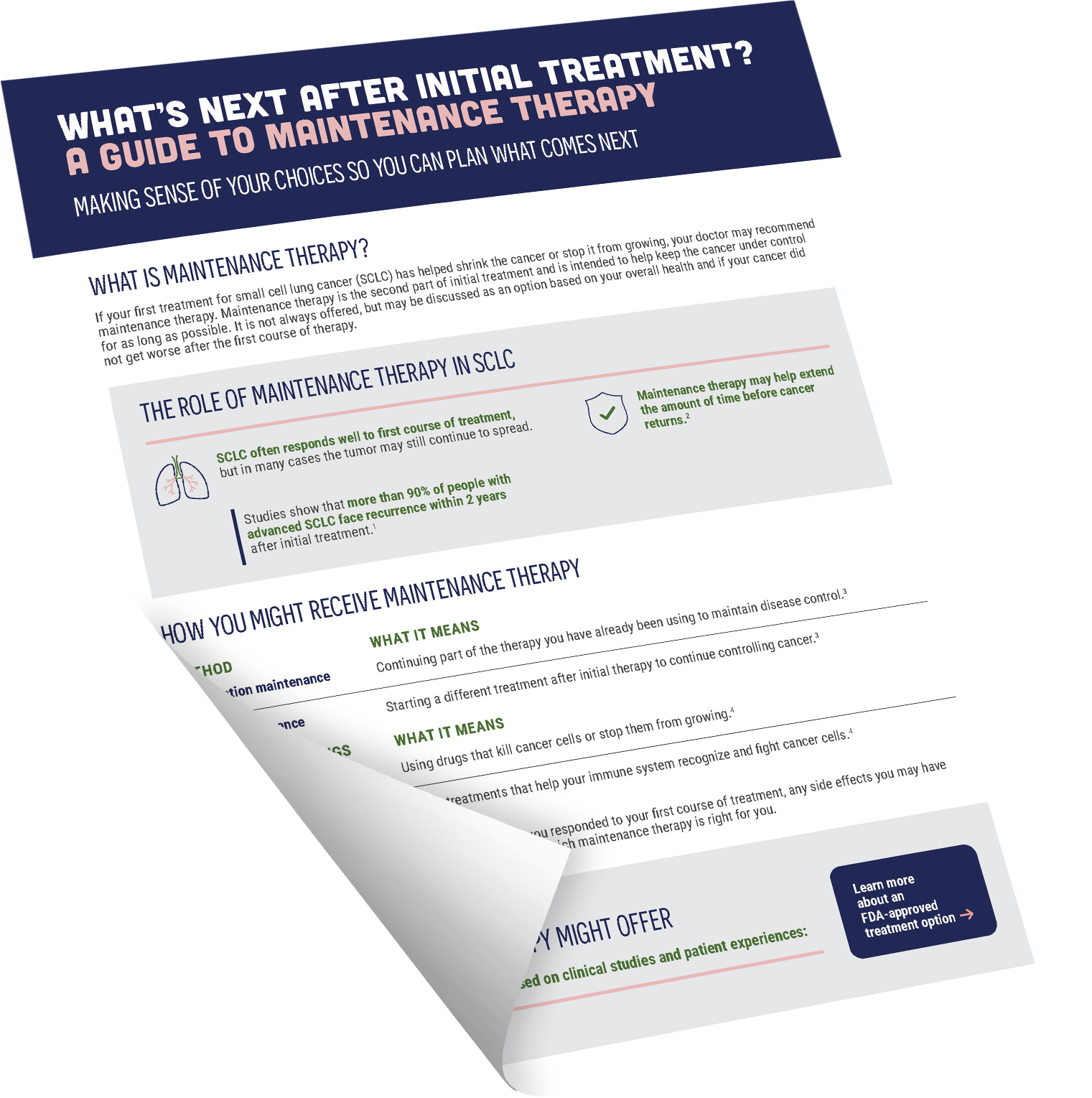
Learn about maintenance therapy and how it may help after initial treatment.
If SCLC comes back (recurs) or continues to grow during or after treatment, additional treatment options may be available. This can include another course of the same chemotherapy or medicines that attack cancer cells in different ways. The choice of subsequent therapy depends on several factors, including how long it has been since your last treatment and your overall health. Your doctor can discuss options for subsequent treatment and what may be right for your situation.2,3
Ask your doctor about setting up a plan from the start for both your first course of therapy and maintenance therapy.