~30,000
people are diagnosed with SCLC in the United States each year5
Lung cancer starts when cancerous cells form in the tissues of the lung. There are 2 types of lung cancer: non-small cell lung cancer (NSCLC) and small cell lung cancer (SCLC). SCLC is named for the small, oval appearance of its cells under a microscope.1–3
SCLC is a fast-growing form of lung cancer and tends to spread quickly to other parts of the body, including the brain, liver, and bones, often before it has been diagnosed. Since SCLC grows quickly, it tends to respond well to chemotherapy and radiation therapy.1,4
~30,000
people are diagnosed with SCLC in the United States each year5
SCLC accounts for about
10% to 15%
of all lung cancers1

Smoking is the most significant risk factor for developing SCLC. In fact, smoking is linked to about 95% of SCLC cases.5
Other risk factors may include6:
Symptoms of SCLC may include7:
Some people with SCLC may not experience any symptoms, especially in early stages. SCLC is often found when a chest X-ray or other imaging test is done for another reason.5
SCLC tends to grow and spread quickly. The prognosis depends on several factors, including the stage at diagnosis and overall health. Because SCLC is aggressive, it's important to start treatment as soon as possible.1,5
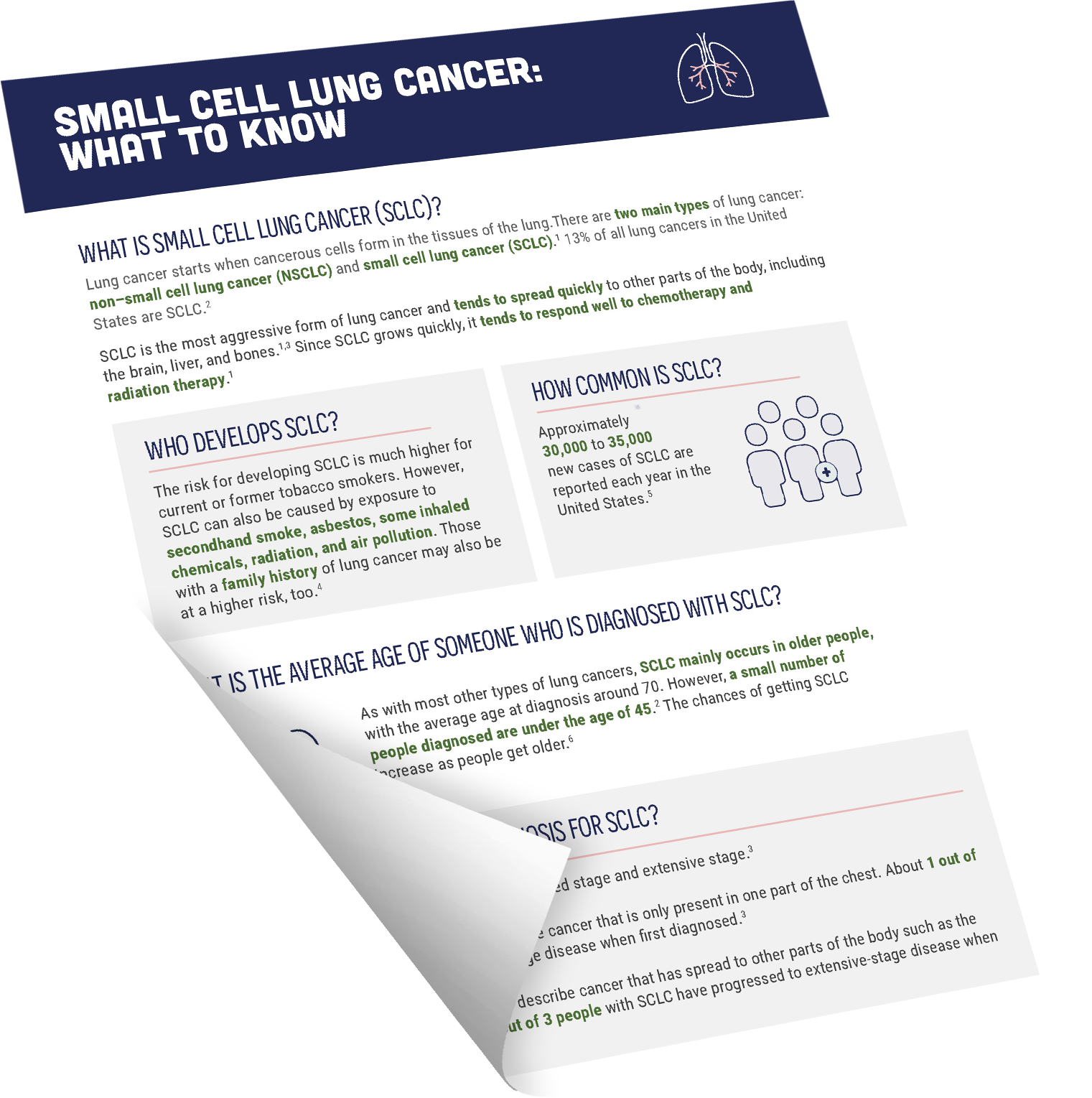
A clear overview of SCLC—from diagnosis to what comes next.